Veterinary referrals are the lifeblood of most canine rehabilitation practices. But building a steady referral pipeline is rarely about persuasion. It is about trust, communication, clinical professionalism, and making the referral process genuinely easy for the referring veterinarian.
This guide breaks down the practical steps a canine rehab clinic can take to build and strengthen relationships with local veterinarians, from identifying the right practices to tracking where your referrals actually come from.
Why Veterinary Referrals Matter for Canine Rehabilitation Clinics
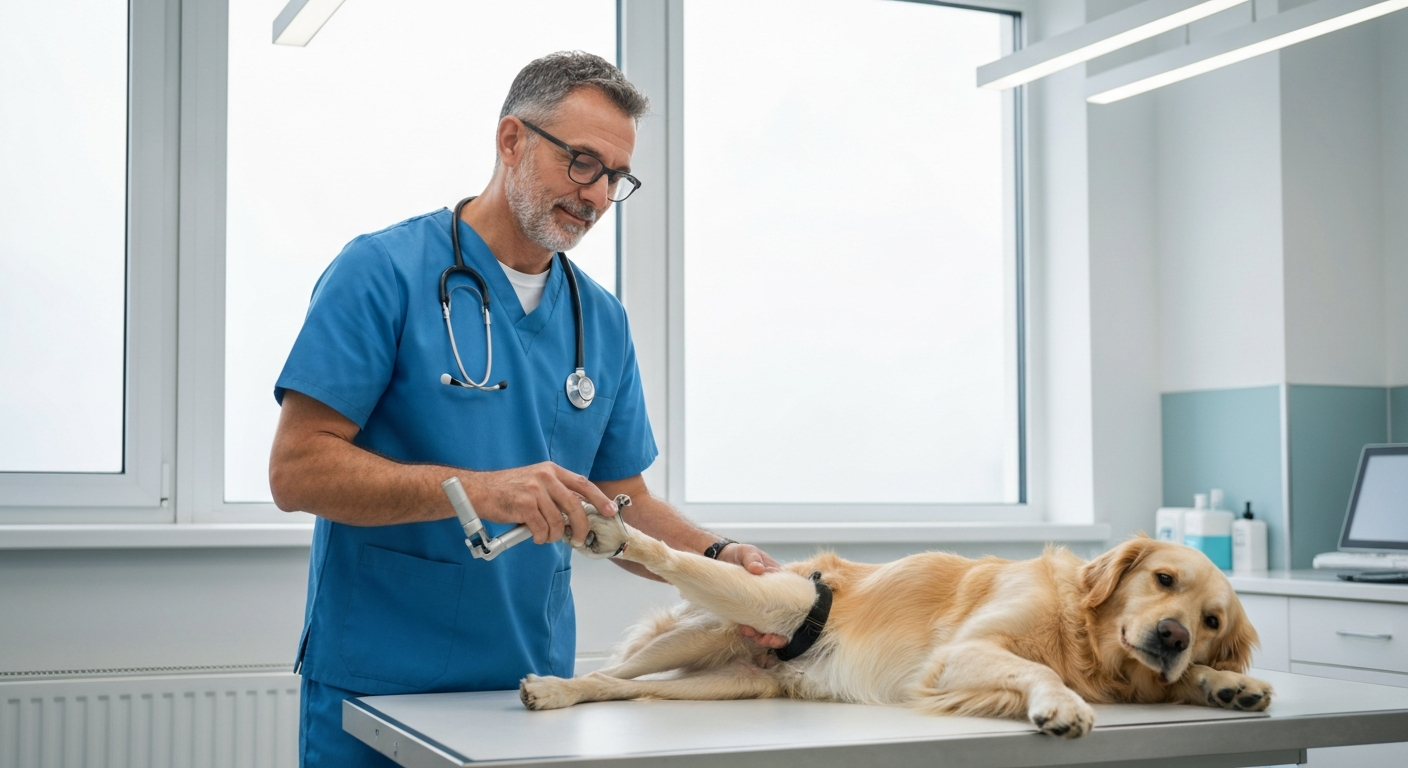
Canine rehabilitation clinics work with post-operative, orthopedic, neurological, mobility, pain-management, and recovery cases. These patients almost always originate from a veterinary diagnosis or surgical procedure. A general practice veterinarian who trusts your clinic will refer post-op TPLO patients, senior dogs with mobility decline, and neurological cases that need structured therapy.
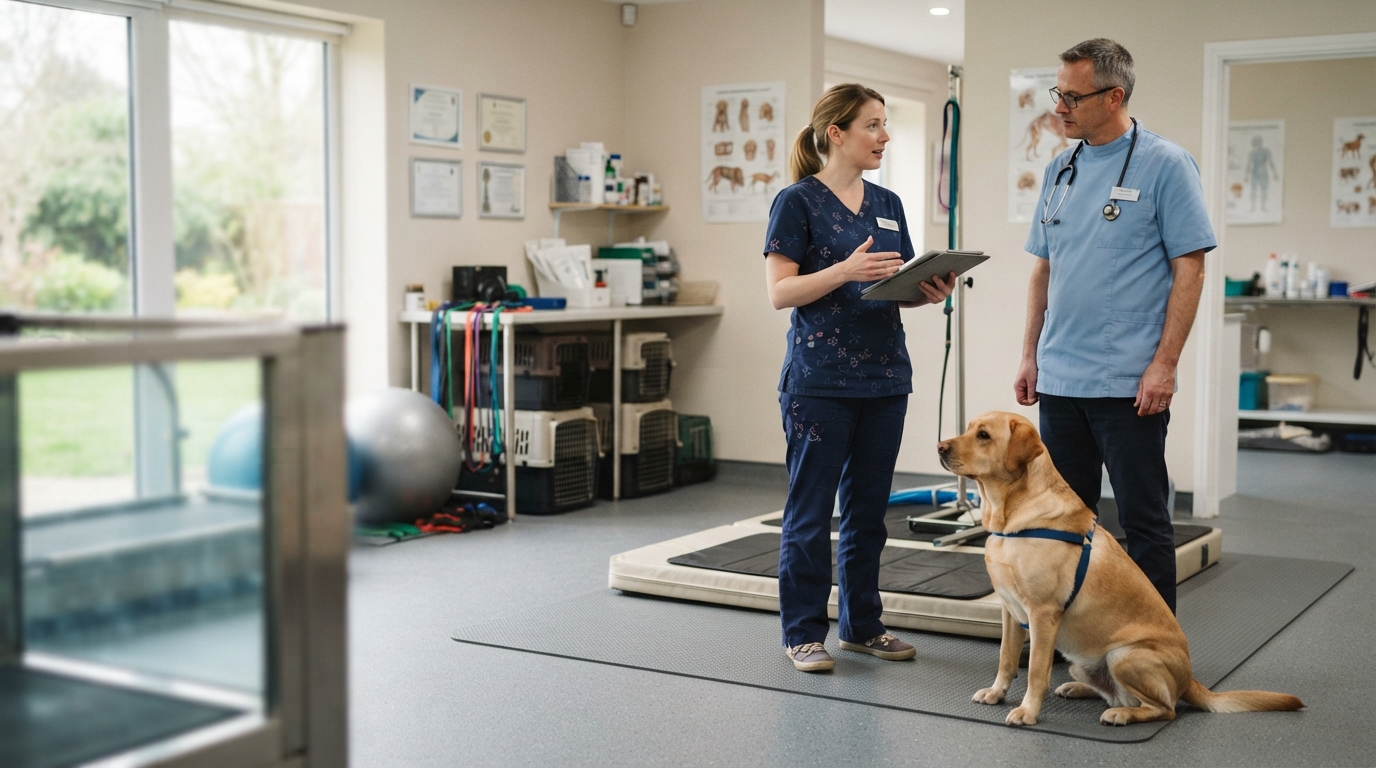
Referral relationships are particularly valuable because referred patients tend to arrive with a clinical context already established. The referring vet has identified the problem, set expectations with the owner, and handed the patient to you with a purpose. Your job is to deliver results and keep the referring veterinarian informed throughout the process.
1. Identify the Veterinarians Most Likely to Refer Rehab Patients
Not every veterinary practice is a good referral source. A focused list of appropriate practices is generally more useful than blindly contacting every veterinarian in your region. Start by identifying the practices most likely to encounter patients that need rehabilitation:
- General practice veterinarians who see senior dogs, arthritis cases, and post-op recoveries on a regular basis.
- Orthopedic and surgical practices that perform TPLOs, fracture repairs, and other procedures requiring structured post-operative rehab.
- Specialty and referral hospitals with neurologists, surgeons, and sports medicine veterinarians on staff.
- Neurologists who manage IVDD, FCE, and other neurological conditions where rehabilitation plays a role in recovery.
Consider geography carefully. Because rehabilitation typically requires frequent appointments over several weeks, travel distance becomes an important practical consideration for pet owners. Focus on practices within a realistic service area, and prioritize those that do not have an in-house rehab program competing with yours.
2. Make It Easy for a Veterinarian to Understand What You Do
One of the most common reasons veterinarians do not refer is simple confusion. If a vet cannot quickly understand what you treat, how you treat it, and how to send a patient your way, they will not bother. Your clinic needs to clearly communicate the following:
- The specific conditions and cases you treat (post-op orthopedic, neurological, mobility, arthritis, weight management).
- The rehabilitation services and modalities you offer (underwater treadmill, laser therapy, manual therapy, therapeutic exercise).
- The credentials of your rehab team (CCRT, CCRP, DVM, PT, veterinary technician certifications).
- Your geographic location and service area.
- How referrals work, including your canine rehab referral form, contact methods, or online portal. A clear referral-process roadmap can also help referring practices understand what to expect.
- How quickly a referred patient can typically be evaluated.
- How referring veterinarians will be kept informed throughout the rehabilitation process.
Avoid pretending every rehab clinic offers the same modalities. If you specialize in hydrotherapy but do not offer shockwave, say so. Clarity builds trust. Vague claims about "comprehensive care" do not.
3. Introduce Your Clinic Without Making It Feel Like a Sales Pitch
The initial introduction sets the tone for the entire relationship. Veterinarians are busy, and they receive marketing materials constantly. The goal is to introduce your clinic professionally and provide genuine value, not to push for referrals on day one.
Practical ways to introduce your rehabilitation practice include:
- A short, professional introductory email that explains who you are, what you do, and how you communicate with referring vets.
- An in-person visit where appropriate, dropping off a concise informational packet rather than a box of donuts.
- Educational materials such as a one-page guide on when to refer a patient for rehabilitation.
- Professional networking through local veterinary associations, continuing education events, or study groups.
- A clinic tour or open house specifically for local veterinary teams.
- Educational lunch-and-learns where you provide clinical value to the veterinary team, not a sales presentation.
Here is a short example of an introductory message a rehab clinic could adapt:
Subject: Introduction - Canine Rehabilitation Services in [Your City]
Dear Dr. [Last Name],
My name is [Your Name] and I am the [Your Title] at [Clinic Name], a canine rehabilitation practice located in [City]. We work with post-operative, orthopedic, neurological, and mobility cases, offering underwater treadmill therapy, Class IV laser, manual therapy, and structured recovery programs.
I wanted to briefly introduce our clinic and share how we communicate with referring veterinarians. After every initial evaluation, we send a concise treatment plan summary. We provide objective progress updates at meaningful intervals, and we send a final discharge report when the patient completes their program, returning the patient to your care for ongoing wellness.
If you have a moment, I would welcome the opportunity to stop by with a brief informational packet and answer any questions about how we work with referring practices. We are also happy to schedule evaluations within [X] business days of a referral.
Thank you for your time, and for the work you do for your patients.
Best regards,
[Your Name], [Credentials]
[Clinic Name] | [Phone] | [Email]
4. Keep the Referring Veterinarian in the Communication Loop
This is where many referral relationships break down. A veterinarian refers a patient, and then hears nothing. They do not know if the patient was evaluated, whether the owner is compliant, or how the recovery is progressing. This lack of communication can discourage veterinarians from referring again.
One example communication framework that clinics can adapt to their patient, referring veterinarian, and clinical situation looks like this:
- Referral received: Confirm receipt of the referral with the referring practice within 24 hours.
- Evaluation completed: Send a brief summary of initial findings and the proposed treatment plan.
- Initial findings and treatment plan communicated: Include relevant functional findings, goals, and expected timeline.
- Meaningful progress updates: Send objective progress data at a clinically relevant interval, such as week 4 or 6, not a daily narrative.
- Discharge and final summary: When the patient completes the program, send a concise discharge report and explicitly state that the patient is returning to the referring veterinarian's care.
Clear communication strengthens professional relationships because it makes the referring veterinarian look good. When a vet can tell their client, "I heard from the rehab team, and Buster is making great progress," it reinforces their role as the primary care provider and builds confidence in the referral. For specific guidance on timing, see our article on how often a canine rehab clinic should update the referring veterinarian. For a deeper look at this workflow, read our guide on the 3-step post-op communication workflow for veterinary referrals.
5. Create Useful, Consistent Rehab Progress Reports
A referring veterinarian does not need a three-page narrative. They need a concise, scannable update that answers three questions: Is the patient improving? Are there any red flags? What is the plan moving forward?
A useful progress report for a referring veterinarian typically includes:
- Patient identification: Name, species, breed, and relevant case identifiers.
- Reason for rehabilitation: The diagnosis or surgical procedure that prompted the referral.
- Relevant functional findings: Objective measurements such as thigh girth, joint range of motion, weight-bearing status, or gait observations.
- Goals: The functional outcomes you are working toward.
- Treatment and progress summary: What has been done, how the patient has responded, and any notable changes.
- Changes or concerns: Any red flags, complications, or new findings the referring vet should know about.
- Next steps: The plan for the next phase of rehabilitation.
- Discharge information: When appropriate, a final summary and explicit return to the referring veterinarian's care.
Use bullet points and objective data. Avoid paragraphs of narrative. You can use our Referral Progress Update Generator to format these updates quickly, or review our guide on how to write a rehab discharge report that actually gets read.
6. Give Veterinary Teams a Reason to Remember Your Clinic
Educational value is more durable than promotional gimmicks. A veterinarian who receives a useful clinical resource from you is more likely to remember your clinic when a qualifying patient walks through their door.
Examples of genuinely useful resources include:
- A one-page post-op rehab guide for common procedures like TPLO or FCE recovery.
- A simple referral checklist that helps a practice quickly identify when a patient is a candidate for rehabilitation.
- Educational lunch-and-learns focused on clinical topics, not your clinic's services.
- Short clinical reference resources, such as a mobility assessment guide for senior dogs.
- Workshops or open houses where veterinary teams can see your facility and ask questions.
- Clear, simple referral instructions, including a dedicated contact method and expected response time.
The emphasis should be on being helpful and easy to work with. Consistently providing value without asking for anything in return can help your clinic remain memorable and strengthen professional relationships over time.
7. Build Relationships With the Entire Veterinary Team
Referral decisions are rarely made by one person in isolation. Front-desk staff, veterinary technicians and nurses, practice managers, associate veterinarians, and other team members all interact with clients and influence the referral process.
A veterinary technician who understands what you do and trusts your clinic may be the person who says, "This dog would really benefit from rehab" during a discharge appointment. A practice manager may be the one who decides whether your informational packet stays on the front desk or goes in the recycling bin.
This does not mean unqualified staff make clinical referral decisions. It means the people who interact with clients and influence workflow all play a role in whether your clinic stays top of mind. Treat the entire team as a professional relationship, not just the lead veterinarian.
8. Track Where Your Referrals Actually Come From
If you are not tracking referral sources, you are operating blind. You cannot strengthen relationships you do not know exist, and you cannot identify practices that have stopped referring if you never tracked them in the first place.
At minimum, track the following for every referred patient:
- The referring practice name.
- The referring veterinarian, where appropriate.
- The number of referred patients from each practice.
- The type of cases referred (orthopedic, neurological, mobility, etc.).
- The date of the last referral from each practice.
- The relationship and outreach history (when you last visited, called, or sent materials).
- The communication status (whether progress updates and discharge reports were sent).
Even a simple spreadsheet or CRM can be useful for this. The goal is to identify which relationships are growing, which are dormant, and which need a follow-up. If a practice that referred three patients last quarter has not sent one this quarter, that is a signal to reach out.
9. Do Not Disappear After You Receive the Referral
Receiving a referral is the beginning of the relationship, not the end. If a veterinarian refers a patient and then hears nothing until the next time you need something, the relationship will not last.
Maintain appropriate professional communication throughout the rehabilitation process. Send the initial evaluation summary. Send a meaningful progress update. Send a discharge report. If a clinically significant change occurs, communicate it promptly. These touchpoints are not just clinical communication. They are relationship maintenance.
A Simple Veterinary Referral Growth System
If you want a concise framework you can implement in your clinic, here is a step-by-step system:
- Build a targeted list of appropriate local veterinary practices within your service area.
- Clearly define the rehab cases and services your clinic handles, including your credentials and modalities.
- Introduce the clinic professionally with a concise email, informational packet, or in-person visit.
- Make referrals easy with a simple, frictionless process and a dedicated contact method.
- Communicate after evaluation by sending a treatment plan summary within 24 hours.
- Send meaningful progress updates at clinically relevant intervals with objective data.
- Send an appropriate discharge or final update that returns the patient to the referring veterinarian's care.
- Track referral relationships, including source, case type, and communication status.
- Continue providing useful educational value through resources, events, and clinical references.
Common Mistakes Canine Rehab Clinics Make When Building Veterinary Referrals
Avoiding these common mistakes is often as important as doing the right things:
- Contacting practices without explaining the clinic's role. If a vet does not understand what you do, they will not refer.
- Focusing entirely on promotion. If every interaction is a sales pitch, the relationship will not develop.
- Failing to communicate after a referral. A lack of follow-up is one of the quickest ways to lose a referral source.
- Making the referral process confusing. If a vet has to hunt for your contact info or fill out a complex form, they will not bother.
- Inconsistent follow-up. Sending one progress update and then disappearing is not enough.
- Failing to track referral sources. You cannot manage relationships you are not tracking.
- Over-contacting practices. Calling or visiting too frequently can be as damaging as not contacting them at all.
- Making unsupported outcome claims. Do not promise specific recovery rates or statistics you cannot back up with data.
Sources and Further Reading
- AVMA Practice Management Resources - General guidance on veterinary practice operations and referral relationships.
- AAHA Practice Resources - Standards and guidelines for companion animal practice management.
- ACVS - Cranial Cruciate Ligament Disease - Clinical information on CCL disease and post-operative recovery relevant to rehabilitation referrals.
Building a Referral System That Lasts
Getting more veterinary referrals is not about a single tactic or a clever email script. It is about building a system that makes referring to your clinic the easiest, most professional, and most clinically rewarding choice for a local veterinarian. That system includes targeted outreach, clear communication, consistent progress reporting, relationship tracking, and ongoing educational value.
If your canine rehabilitation clinic wants a more consistent system for staying visible to referring veterinarians and keeping referral relationships organized, Webdogg helps canine rehab practices build the marketing and communication systems behind that growth. From referral outreach to progress update workflows and client communication, the goal is the same: make your clinic the obvious choice for the next referral.
Disclaimer: This article is intended for canine rehabilitation clinic owners and practice managers. It addresses marketing, communication, and business growth, not veterinary medical advice. Referral requirements and scope of practice vary by jurisdiction. Clinic owners should confirm regulatory requirements with their local veterinary regulatory authority.
Frequently Asked Questions
Get the Free Canine Rehab Growth Checklist
Get practical canine rehab growth insights and our 24-point growth systems checklist delivered to your inbox.