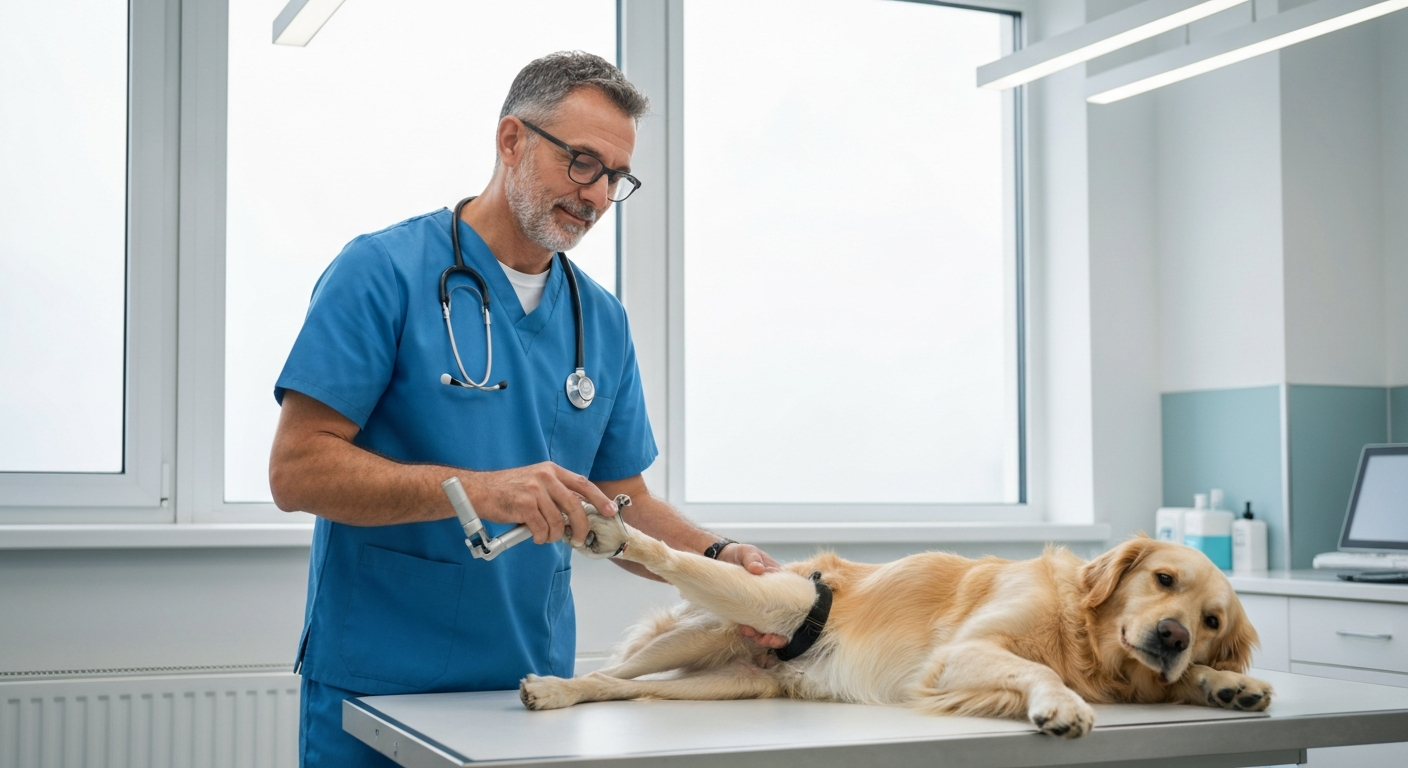
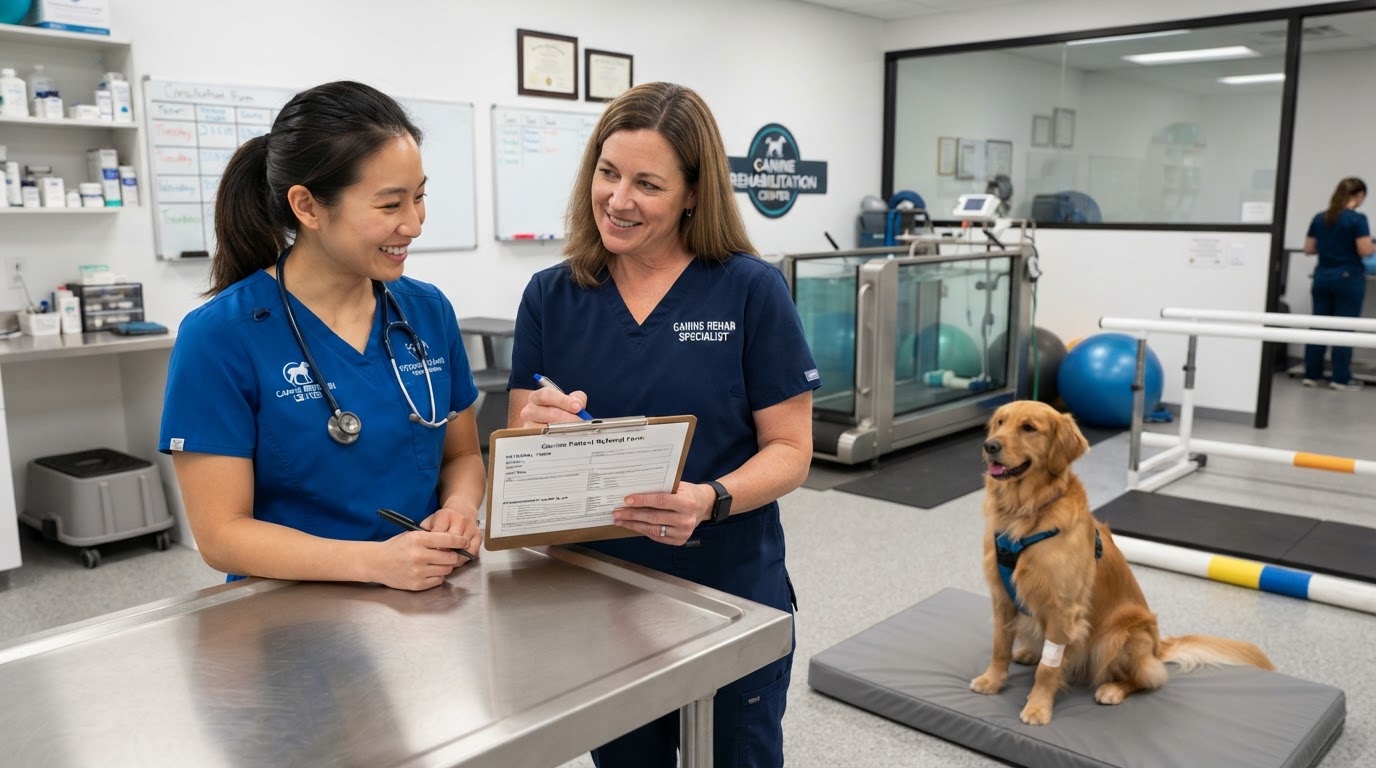
A well-designed veterinary referral form is often the first formal touchpoint between a primary care practice or surgical center and a canine rehabilitation clinic. When structured thoughtfully, it provides the essential information needed to support a clear and organized intake process without creating administrative friction for the referring veterinary team.
A useful canine rehabilitation referral form typically collects the patient's identifying information, the referring practice's contact details, the reason and intended scope of the referral, relevant medical history and records, timing or urgency indications, and professional communication preferences. The exact layout should reflect your clinic's services, team structure, professional roles, protocols, and applicable regulatory requirements.
Distinguishing the Form From the Complete Record
It is helpful to separate three distinct elements of the referral workflow:
- The initial referral form: Initiates the request and captures core patient, practice, and referral details.
- Supporting medical information: Operative notes, diagnostic imaging, lab work, and clinical records that accompany the referral.
- Ongoing professional communication: Evaluation summaries, progress updates, and discharge reports sent back to the veterinarian.
What Is a Canine Rehabilitation Referral Form?
A canine rehabilitation referral form is a structured document or online interface used to initiate and document a referral request and provide relevant information to the receiving rehabilitation practice.
The 2025 AAHA Referral Guidelines explain that web-based submission forms can provide a structured framework for sharing referral information and identifying the records or details requested by the receiving team. Canine rehabilitation practices can adapt this concept to their own professional roles, services and requirements. To explain the broader process around the form, see our guide on creating a veterinary referral roadmap.
Referral forms may be submitted through a secure online portal, an integrated veterinary system, secure email, document transfer, or fax. Clinics should select submission methods consistent with their professional, privacy, recordkeeping, security, and jurisdictional obligations.
The Essential Sections of a Veterinary Referral Form
While every rehabilitation practice may customize its form based on service focus and workflow, a practical referral form may organize its fields into seven functional categories:
1. Patient Information
This section captures core demographic data necessary to create a patient profile and coordinate with the owner:
- Patient name, species, breed, age or date of birth
- Sex and reproductive status (spayed/neutered)
- Current weight and body condition observations, when relevant
- Owner or responsible party's full name
- Owner contact details (phone number, email address)
- Preferred owner contact method, if collected appropriately
2. Referring Veterinarian and Practice Information
Accurate referring practice information is critical for maintaining a two-way communication channel:
- Referring veterinarian's full name and credentials
- Practice name, clinic phone number, and physical address
- Direct professional email or designated report inbox
- Preferred report recipient (e.g., specific associate vet or central medical records inbox)
- Primary practice point of contact or referral coordinator, when applicable
3. Reason and Scope of the Referral
Defining the reason for referral ensures the receiving team understands the clinical context and goals:
- Primary reason for rehabilitation (e.g., TPLO recovery, IVDD conservative management, osteoarthritis pain management)
- Relevant diagnosis or working diagnosis provided by the referring veterinarian
- Surgical procedure performed and exact date of surgery, when applicable
- Functional concerns or mobility goals noted by the referring professional
- Intended scope of referral (e.g., targeted post-op knee rehabilitation vs. comprehensive weight and conditioning)
- Timing or urgency indicated by the referring professional
4. Relevant History and Current Medical Information
When relevant, restrictions, precautions, concurrent conditions and other concerns supplied by the appropriate professional may need to be communicated as part of the referral process. The information needed depends on the patient, referral reason, professionals involved, clinic protocols and applicable requirements. Examples may include:
- Pertinent medical history and underlying conditions (e.g., cardiac disease, neoplasia, seizure history)
- Specific surgical precautions, weight-bearing restrictions, or ROM limitations established by the surgeon
- Current medications, pain management protocols, and supplements
- Client observations or behavioral considerations (e.g., anxiety, dog reactivity)
5. Records and Supporting Materials Instructions
Clear instructions help the referring staff submit accompanying documentation when relevant. Not every referral requires every item below; the appropriate materials depend on the patient, referral reason and the professionals involved:
- Operative and anesthesia reports for surgical cases
- Diagnostic imaging reports (e.g., radiograph findings, MRI/CT interpretations)
- Instructions for digital DICOM image transfer or link sharing
- Recent laboratory test results or bloodwork, where relevant
6. Communication Preferences
Asking how the practice prefers to receive updates sets up a smooth collaboration:
- Preferred transmission channel (email, secure portal, fax)
- Preferred report frequency (evaluation only, milestone updates, discharge summary)
- Notification preferences for urgent clinical observations or plan modifications
7. Form Completion Details and Acknowledgment
Administrative completion tracking ensures verification:
- Name and title of the person completing the submission
- Date of submission
- Confirmation that medical records have been attached or sent via separate channel
A Practical Referral-Form Checklist
Use this functional checklist to review your clinic's current referral intake form and identify gaps or unnecessary friction points:
Patient & Practice Details
- Patient name, breed, age, sex, weight
- Owner name and primary phone/email
- Referring veterinarian name & practice name
- Direct vet email or medical records inbox
- Preferred contact method for reports
Clinical & Workflow Details
- Primary referral reason & diagnosis
- Surgery date & specific precautions
- Current medications & precautions
- Record/imaging attachment instructions
- Submission date & form completer name
Example Referral-Form Layout
Below is an illustrative operational layout demonstrating how fields can be logically grouped to create an intuitive experience for busy practice staff:
Illustrative Operational Example — Adapt to your clinic's protocols and local requirements
Canine Rehabilitation Referral Request
Please complete this form and attach relevant surgical notes or diagnostic reports.
Section 1: Referring Veterinarian
Section 2: Patient & Owner
Section 3: Referral Reason & Clinical Background
Section 4: Records & Attachments
For digital DICOM radiograph sharing, email link to: records@yourclinic.com
How to Keep the Form From Becoming a Barrier
A form that asks for too much information or uses confusing layouts can discourage busy veterinary technicians or receptionists from completing it. To reduce friction:
- Ask only for essential initial data. Do not force referring clinics to fill out 40 mandatory fields before submitting. Keep optional fields clearly marked.
- Separate required fields from optional details. Require core contact details, patient ID, and referral reason, but make extended history optional.
- Provide flexible transmission options. Allow online submission, fillable PDF, or email attachment so practices can use their preferred routine.
- Clear attachment instructions. Explain exactly where to send DICOM links or large medical records files if your web form limits file sizes.
- Mobile and tablet optimization. Ensure your online form renders clearly on mobile devices, as clinic staff often complete forms on tablets.
Online Form, PDF, or Referral Portal?
Canine rehab practices utilize various formats for accepting referrals. The table below compares common methods:
| Method | Potential Advantages | Potential Limitations | Operational Consideration |
|---|---|---|---|
| Web-Based Form | May support structured submissions and file uploads depending on the system, mobile accessible | Requires web setup and staff monitoring | May suit clinics seeking a structured intake workflow |
| Fillable PDF | Familiar format, easily printed or saved into EMR systems | Requires manual emailing or faxing, manual file management | May be familiar to practices already using PDFs |
| Referral Portal | Centralized history, status tracking for referring vets, may allow file uploads depending on the system | Requires referring vets to create accounts or log in | May suit clinics with higher referral volume |
The 2025 AAHA Referral Guidelines, Section 4: Responsibilities During Referral highlight the value of standardized referral forms, clear submission instructions, and referral roadmaps that document preferred communication methods and frequency. These concepts can be adapted to canine rehabilitation workflows, though the guidelines are not a legal requirement and every clinic should align its process with its own professional roles, protocols, and applicable obligations.
Using a digital tool does not by itself make a referral process secure, compliant, or effective. The clinic must evaluate the specific system, access controls, transmission method, workflow, and applicable requirements.
What Happens After the Form Is Submitted?
The referral form is only the start of the referral lifecycle. Having a clear internal protocol for handling incoming forms prevents lost leads and delays:
- Confirm receipt through the clinic's established workflow. An automated or staff-sent acknowledgment can let the referring practice know the submission arrived.
- Review for completeness. Have a designated staff member check whether required surgical notes or radiograph reports were included.
- Contact the pet owner. Reach out to the client to schedule their initial rehabilitation evaluation and explain what to expect.
- Record the referral source in your CRM or software. Log the referring practice and veterinarian to track relationship history over time.
- Close the loop after the initial evaluation. After the initial evaluation, an update is often useful for closing the communication loop. The timing, recipient and content should reflect the patient, the referring veterinarian's preferences, clinic protocols and applicable professional requirements (see our guide on how often to update referring veterinarians). Once the patient is being seen, the referral progress update generator can provide a structured starting point for drafting a professional update, though any generated draft still requires patient-specific review by the appropriate professional. At the end of the rehabilitation episode, follow our guidance on writing a clear canine rehabilitation discharge report to close the communication loop.
Common Veterinary Referral-Form Mistakes
Avoid these common operational pitfalls when designing your referral process:
- Asking for unnecessary medical detail on the form itself. Let the attached medical record carry the detail; keep the form focused on key questions.
- Making every field mandatory. If a field is not strictly essential, make it optional to avoid form abandonment.
- Failing to specify a report recipient. Include a field for the preferred report recipient when it supports the clinic's workflow so updates reach the intended professional.
- No clear record transmission instructions. Leaving practices guessing where to send heavy DICOM radiograph files creates unnecessary phone calls. Organized record sharing also helps teams avoid miscommunication and unnecessary duplication of diagnostics, a common pitfall noted in the 2025 AAHA Referral Guidelines, Section 8: Avoiding Common Referral Pitfalls.
- Treating the form as a substitute for communication. A form transfers data, but professional relationships are built through consistent post-evaluation reporting. For details on structured communication, read our article on post-op communication workflows for vet referrals or explore our broader guide to getting more veterinary referrals.
The Bottom Line
A useful canine rehabilitation referral form provides referring practices with a clear, structured way to provide patient, practice, clinical, and communication information. By collecting essential data without creating avoidable friction, your clinic can support organized intake and professional communication, and establish strong collaborative care workflows with local veterinarians.
If your clinic's referral forms, website, or communication process are difficult for referring practices or pet owners to navigate, Webdogg can review how clearly your clinic presents its services and next steps online. Request a free Clinic Visibility Check to see what may be creating unnecessary friction in your patient intake pipeline.
Disclaimer: This article is intended for canine rehabilitation clinic owners, practice managers, and clinical staff. It addresses business workflow and communication systems, not veterinary medical advice. Professional scope of practice and legal referral requirements vary by jurisdiction. Clinic owners should confirm specific requirements with their local veterinary regulatory authority.
Frequently Asked Questions
Get the Free Canine Rehab Growth Checklist
Get practical canine rehab growth insights and our 24-point growth systems checklist delivered to your inbox.